
Matt McCraney’s ministry includes serving the Army, special needs families
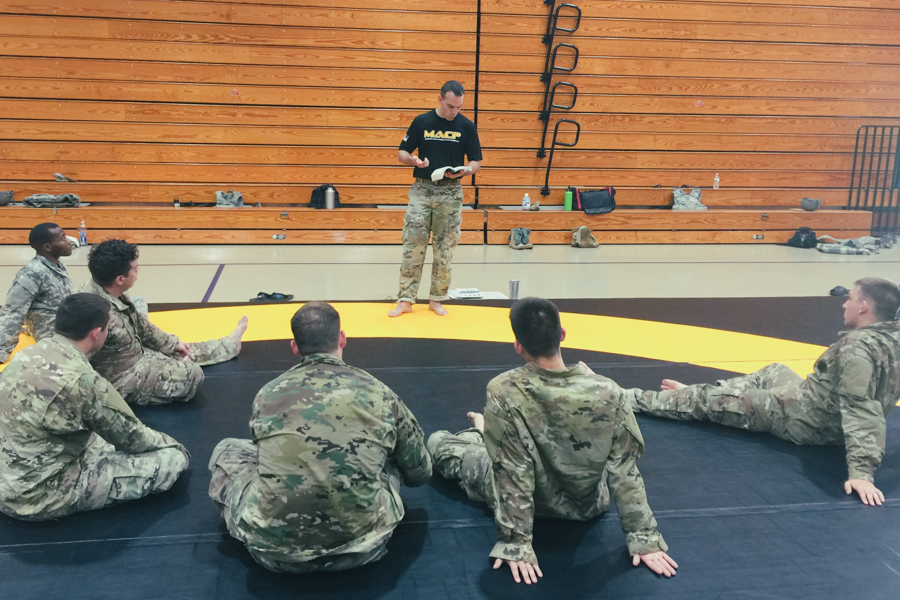
Matt McCraney’s call to ministry has led him from children’s, youth, and pastoral ministry to chaplaincy with the U.S. Army, and now the Southwestern Baptist Theological Seminary alumnus also ministers to parents and families with special needs children.
McCraney grew up in Alexandria, Virginia, where his mom was a church secretary, and he recalled that he and his family would be there any time the church doors were open. But this changed around the age of 13 when he moved to Florida with his dad after his parents divorced. It was only after he returned to Virginia as an adult and met his wife that his faith was renewed.
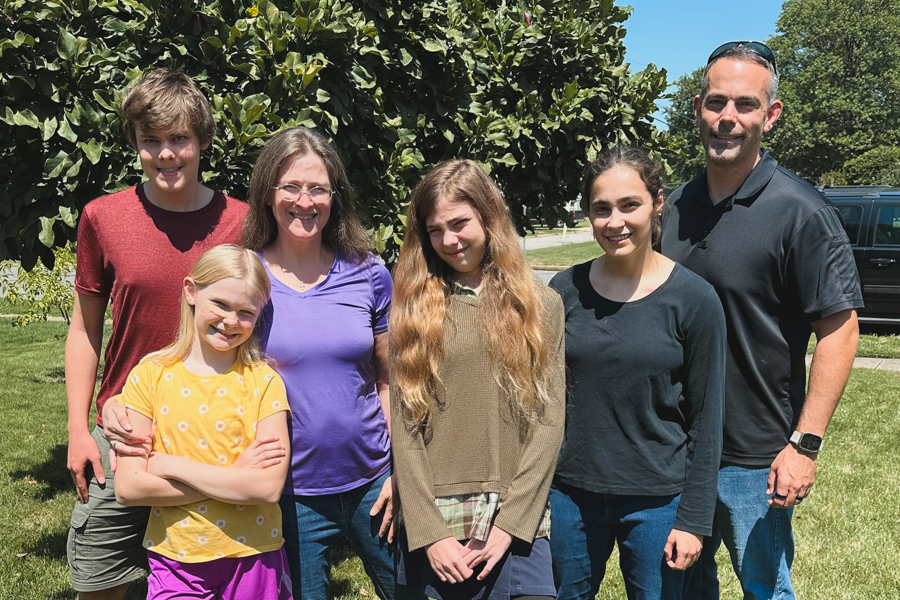
“When I moved back from Florida, I kind of re-engaged with my faith, re-engaged with the church, and just felt that strong call to ministry when I met my wife,” he said. He and his wife Sarah have been married for 22 years and have four children.
He enrolled at Liberty University where he would earn a Bachelor of Science in Religious Studies and a Master of Divinity (MDiv). McCraney served as an associate pastor for children and then as a youth pastor at a different church, where he said many in the congregation were miliary or retired military. He witnessed the different struggles they faced and began thinking of how he could serve them better.
After much prayer, McCraney joined the Army first as a reserve soldier in the chaplain candidate program while he also pastored a church. Then in 2013, he became active duty as a chaplain.
“We decided to kind of jump both feet into the active-duty world,” he said. He would end up being stationed in places such as Hawaii, North Carolina, Illinois, and Florida, also spending time as a chaplain recruiter.
McCraney explained his role as a chaplain has been very rewarding because of the close bonds he has with his fellow soldiers as they serve together, calling chaplaincy in the Army “embedded ministry,” as the chaplain goes on assignments with the rest of the unit.
“If you’re out in the field, then the chaplain’s out in the field. I went to Fort Bragg with some special operations units and when they were jumping out of airplanes, I was jumping out of airplanes with them,” McCraney said. “We call it ministry of presence. And then when soldiers see that chaplain that’s out there with them, they feel comfortable to talk about things when things kind of go bad in their life.”
He decided to further his education after entering active duty as a chaplain to prepare for complicated issues he encountered as a chaplain, both ethically and personally. He received his Doctor of Ministry (DMin) from Southeastern Baptist Theological Seminary in North Carolina in 2018.
But while serving as a chaplain and continuing his education, McCraney’s family began to have concerns for their son, who was demonstrating sensory issues, unusual reactions to certain situations, unique behaviors, and difficulty with social interactions. Then when their son was eight years old, he and his wife learned that he had autism, a neurological disorder that impacts cognitive function and behaviors.
“When he was diagnosed, it was sort of a relief because we finally knew what we were dealing with,” he said. “And that was really helpful for us. … It helped us to frame these things in more of a, ‘Hey, we live in a fallen world where our bodies don’t work right and sometimes our brains don’t work right, and this is part of that fallen world that we live in.’”
He said one of the most difficult aspects of learning about autism is realizing how much misinformation is out there, including among churches and how some of its members view disability. In both the church and the world, McCraney said there are two extreme viewpoints of autism, one stating that anybody can be autistic, while the other believes it is just behavioral and not a medical diagnosis.
“You can self-identify as autistic; you don’t really need a diagnosis,” McCraney said of the first belief. “On the other side you have some people in the Christian community that think that autism isn’t real, it’s a misunderstanding. And there are some people who have profoundly misunderstood what autism is, and they put it almost exclusively in a behavioral category or a sin category.”
He said he has even seen an almost “prosperity gospel” view of autism and disability, even in books, that tell people, “If you just do things God’s way, then your kids will come out fine.” McCraney said if people do not take those “transactional glasses off when we see people with a disability, then we’re always going to treat them like outsiders,” adding that when people continue to assume parents are at fault, “they’re never going to be a solid part of our churches.”
Even before finishing his DMin, McCraney said he knew he wanted to pursue a Doctor of Philosophy as well. In 2020, he enrolled at Southwestern with a desire to enhance his understanding of how people view disabilities, hoping his research would bring awareness. His dissertation was titled “God’s Lordship Over Disabilities: An Examination of the Social Model of Disability.”
He explained the medical model assumes a person’s main need is for healing, the moral model theorizes the disability is a person’s fault, and the social model focuses on the disability being a social construct in need of social justice. McCraney said the social model has been negatively influenced by things like social media.
Reflecting on his time at Southwestern, McCraney said enrolling in 2020 was the perfect time for him to start working on his PhD as he was able to join seminars online instead of in-person during seminar meetings.
“It worked out great for me because it was 2020, Covid had just hit, and everybody was dialing into the classes,” which McCraney said allowed him to participate in classes during the day while he worked in the evenings. “All the professors were just wonderful and very accommodating and understood I’d have weird schedules sometimes where I’d have to be gone because of something to do with the Army.”
McCraney completed his degree in 2023 and said he took many wonderful classes at Southwestern, but the colloquium classes were the most beneficial because of the multi-disciplinary approach it took on complicated subjects from different professors. These classes helped prevent “being siloed in your field, which is a real danger, I think, with certain disciplines,” he said.
“So, the stuff that I learned at Southwestern was just really critical to dive deeper, to ask critical questions, and to always be turning it back to, ‘What is the most God-honoring thing to do in this situation?’” he said.
When he was researching and writing his dissertation, Lilly Park, associate professor of biblical counseling and his PhD supervisor, provided McCraney connections to publication sources that allowed him to publish articles on disability. Things just took off from there, he said. He has written articles for Joni and Friends, the Gospel Coalition, Journal of Biblical Counseling, Southwestern’s Equip The Called blog, and the Military Chaplaincy Review.
He is also working with Sandra Peoples, adjunct professor in the Terry School of Educational Ministries and current doctoral student, to write a chapter in a book she’s publishing next year. In December, Peoples will teach the first course of a new disabilities ministry concentration at Southwestern.
Over the summer, McCraney published a mini book called, Help! My Child has Autism, what he called a pocket guide for parents that includes his personal experiences on how autism has affected his own family through finances, hospitalizations, and other hardships.
McCraney is currently stationed in Fort Eustis, Virginia, and is working as the spiritual domain lead for the Army’s Holistic Health and Fitness initiative, also called H2F. The program defines overall health and wellness by five pillars, which are physical, mental, spiritual, nutrition, and sleep. He said he basically writes the principles for the initiative and helps the Army understand what spirituality is and gathers facts on the effect of it.
“There’s a lot of research involved. There’s a science to spirituality, so the Army is trying to use that science to better understand what drives people,” McCraney said. Research has found that persons for whom religion is an important part of their lives tend to have less behavioral issues, he noted.
Chris Shirley, dean of the Terry School and professor of educational ministries, recalled how McCraney was “one of the finest students we have had in recent years.”
McCraney has remained connected with Southwestern and has been a guest speaker in some of Park’s classes.
“As a PhD student, he added valuable insights that deepened seminar discussions. Over the years, students have praised his teachings in my class,” Park said,
In the spring, he will be teaching a course on “Counseling Methodology: Historical and Contemporary” in the professional doctoral studies program as an adjunct professor.
Park said students will benefit from McCraney’s expertise.
“I’m excited that Matt McCraney will serve as an adjunct professor,” she said. “He brings unique experience as a pastor, biblical counselor, chaplain, and scholar. Students will appreciate his sharp mind, biblical discernment, pastoral leadership, and counseling experience.”
“I’m just really appreciative of all the people at Southwestern and the opportunity to teach there,” McCraney said. “I really appreciate everybody that has helped me along that journey because they’ve been so supportive.”


